
Decolonize your sip
Decolonize your THC
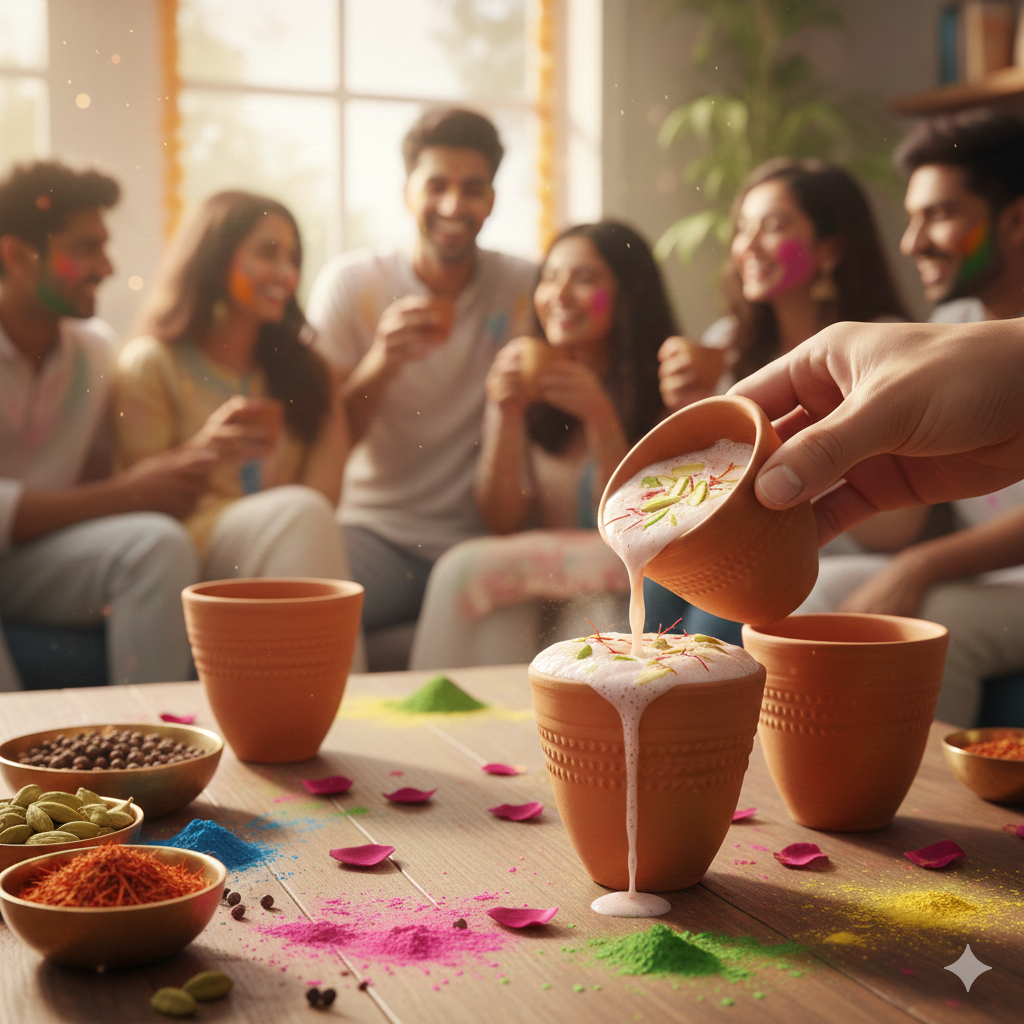
Walk into almost any dispensary and the THC beverage shelf tells a familiar story. Cans upon cans of fizzy, citrus-forward seltzers dressed in minimalist branding, promising a “clean” high. They work, sure. But they also reduce cannabis into a single note, divorced from culture, history, and the many ways humans have related to this plant long before it became trendy.
Decolonizing your THC beverage means asking a simple question: Who decided what getting high should look and taste like?
For us, that question became the beginning of Desi High.
Cannabis started in ritual, not in a lab
Cannabis has been used across the Indian subcontinent for thousands of years as a medicine, sacrament, and social connector. Ancient texts like the Atharva Veda reference cannabis as one of the five sacred plants believed to relieve anxiety and aid happiness. Long before prohibition, the plant existed openly within spiritual, medicinal, and celebratory contexts.
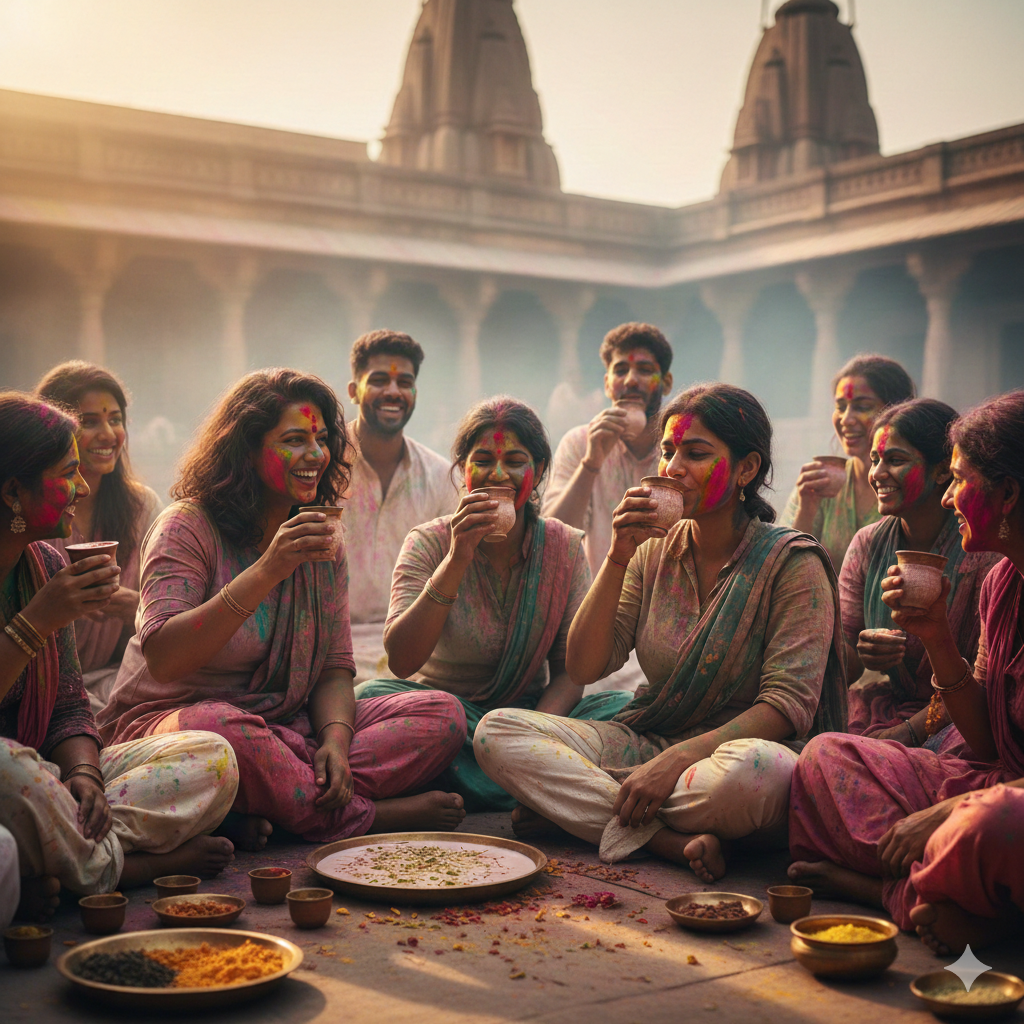
One of the most well-known expressions of this relationship is Bhaang, a cannabis preparation traditionally consumed during festivals like Holi and Maha Shivratri. During Maha Shivaratri, bhaang becomes more than a drink. It becomes a symbol of:
Renunciation of ego
Altered perception through devotion
A bridge between the earthly and the cosmic
In that sense, the connection is less about the plant itself and more about what it represents: transcendence, stillness, and surrender under the vast, watchful night of Shiva.
Bhaang is not smoked. It is sipped. Typically, it is mixed into Thandai, a cooling drink made with milk or cashew milk, almonds, pistachios, fennel seeds, cardamom, black pepper, saffron, and rose. Each ingredient is intentional. In Ayurvedic philosophy, these spices balance heat in the body, aid digestion, and ground the nervous system. The drink is rich, creamy, aromatic, and meant to be enjoyed slowly, often in community.
This matters, because it reframes cannabis not as a party trick, but as a plant with lineage.
Colonization didn’t just redraw borders. It rewrote narratives
British colonial rule in India did more than extract resources. It disrupted indigenous knowledge systems, including how plants like cannabis were understood and used. Over time, cannabis became stigmatized, criminalized, and stripped of its cultural context. What was once a ritual became a taboo. What was once communal became a secret.
Fast forward to today, and cannabis is legal again in many places, but the industry that emerged is overwhelmingly Western, commercialized, and disconnected from the cultures that carried this plant forward for centuries.
Decolonizing THC does not mean rejecting innovation. It means remembering origin.
The birth of Desi High
Desi High was born from nostalgia, frustration, and a deep love for our culture.
Nostalgia for flavors we grew up with. Rose. Cardamom. Fennel. The smell of Chai simmering. The taste of Thandai during Holi.
Frustration at walking into cannabis spaces and never seeing ourselves reflected. No brown faces. No queer brown joy. No acknowledgment that cannabis did not originate in a white, minimalist can.
And love. For ritual. For community. For the idea that pleasure and intention can exist together.
So we asked: What would it look like to bring Bhaang into the present, without losing its soul?
Tradition, modernized with care
Desi High produces the world’s first Bhaang/Thandai in a can.
Our beverage is creamy, vegan, and shelf-stable, inspired directly by traditional Thandai recipes from the Indian subcontinent. We use plant-based milks and warm, floral spices that echo centuries of Ayurvedic wisdom.
The biggest shift is precision.
Traditionally, Bhaang is made by grinding raw cannabis leaves. Potency varies wildly depending on the plant, the batch, and the person preparing it. One sip might do nothing. The next might do too much.
Desi High replaces that unpredictability with precisely measured THC, creating a consistent, intentional experience in every can. No guessing. No grinding. Just ritual, refined.
This is not about making cannabis stronger. It’s about making it thoughtful.
Bored of seltzers? So were we
Seltzers dominate the THC beverage market because they’re easy to produce and easy to sell. But they are not the only way to drink cannabis.
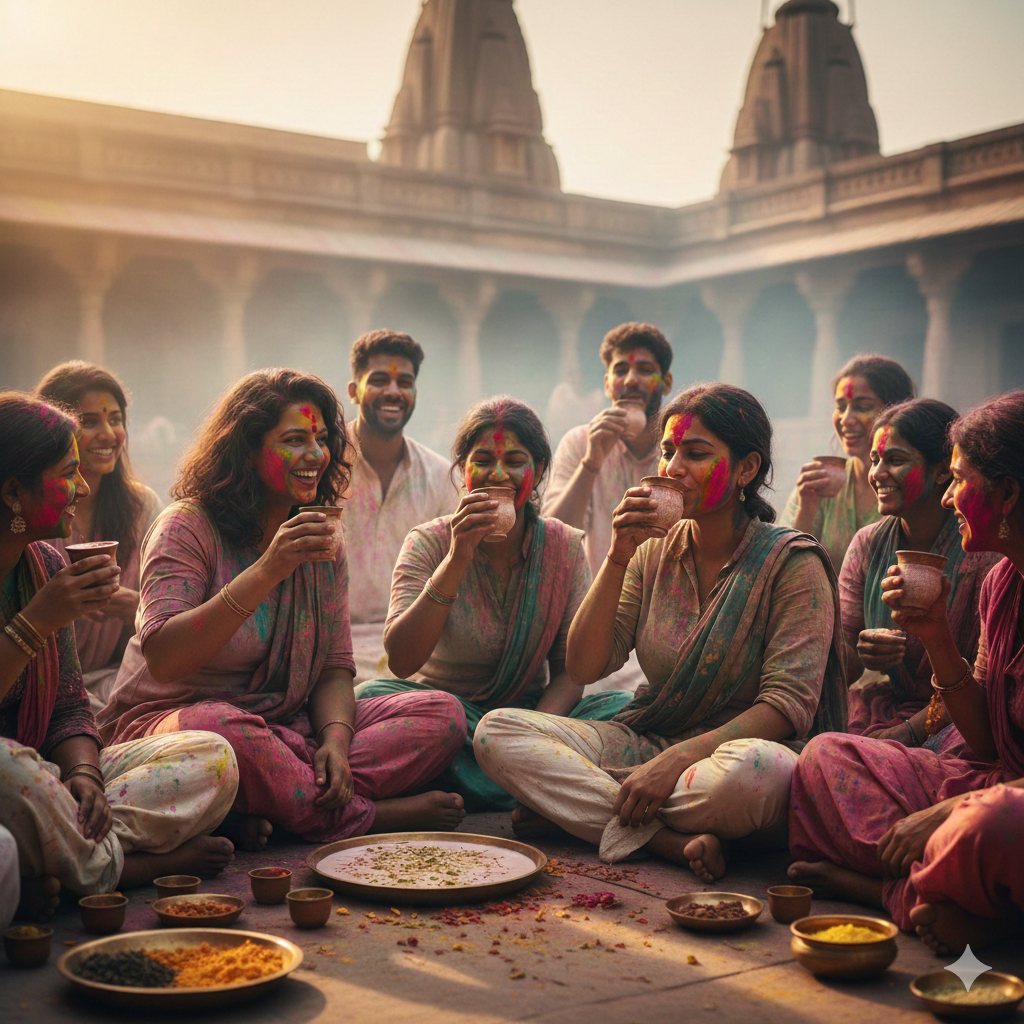
Desi High offers something different. A texture. A richness. A moment that feels closer to dessert, closer to Chai, closer to sitting on the floor with people you love while color stains your hands during Holi.
Desi High - A brand rooted in representation
Desi High is queer-owned, women-owned, and South Asian-founded.
Our existence challenges multiple assumptions at once: who cannabis is for, who gets to lead, and whose stories are worth centering. We build with community in mind, collaborating with South Asian creatives, educators, and wellness spaces to host events that blend culture, conversation, and cannabis education.
Decolonization is not just about products. It is about voice and visibility. By choosing Desi High you choose intention over trend and honoring the cultures that carried this plant through centuries of joy, healing, and resistance

Why Masala Chai
It All Begins Here
In Ayurvedic tradition, Masala Chai is designed with purpose. The spices commonly used — ginger, cardamom, cinnamon, cloves, black pepper — are not added for decoration. They are believed to stimulate digestion, support circulation, and bring warmth and grounding to the body. Chai is often consumed slowly, in small cups, and in moments of pause. It’s not about chasing energy or escape. It’s about balance.
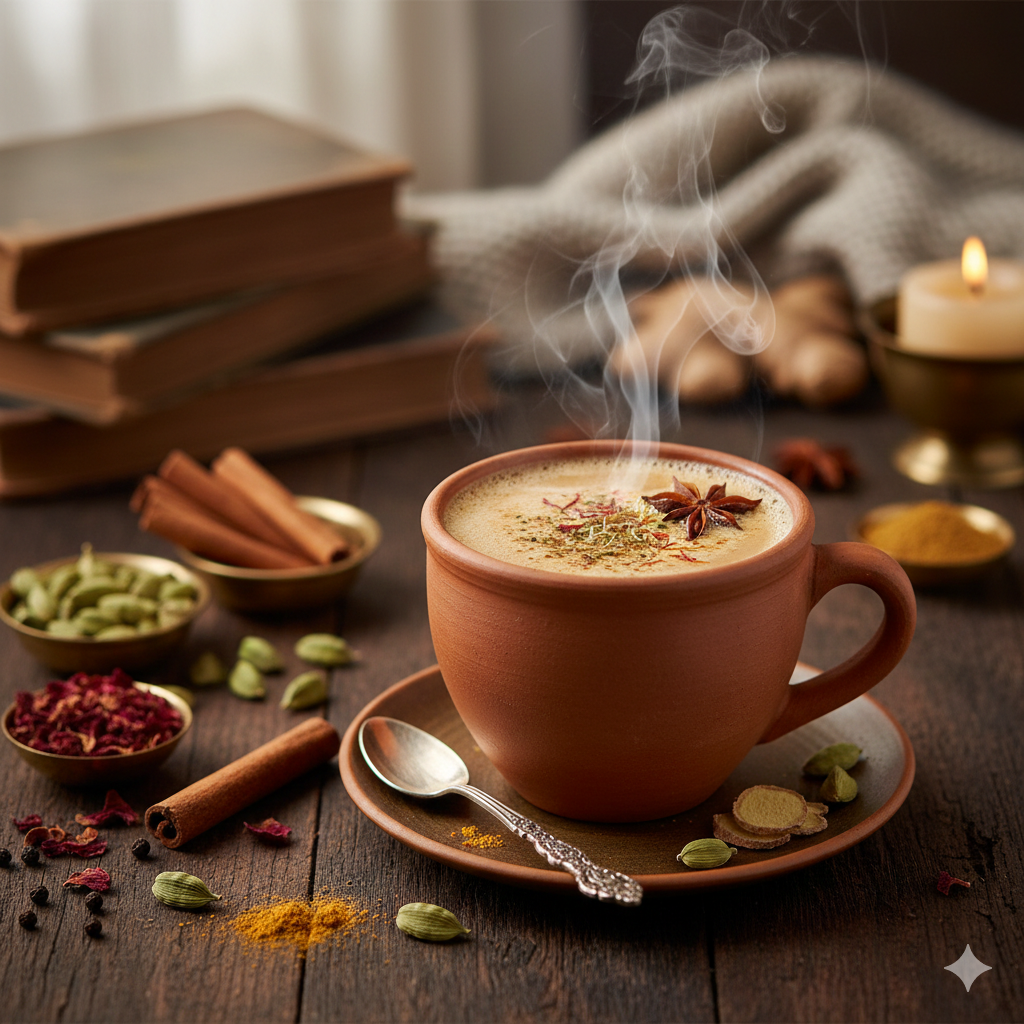
That philosophy aligns naturally with a thoughtful THC experience. Cannabis, when used intentionally, can encourage presence, ease, and reflection. Pairing THC with masala chai isn’t about intensifying effects. It’s about creating a grounded, familiar container for them.